
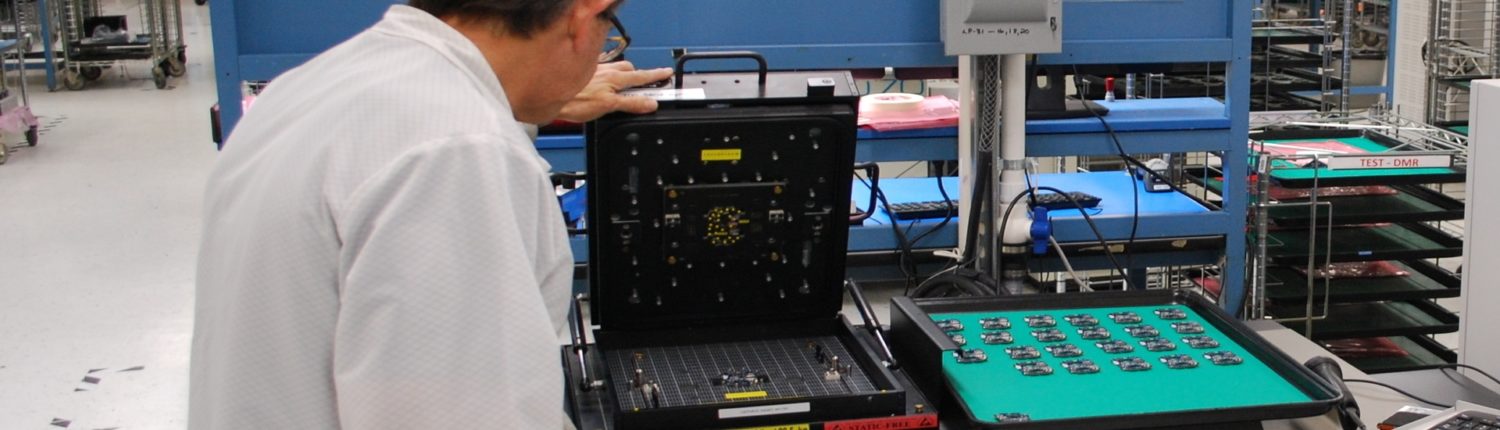
We maintain a large staff of degreed electrical and mechanical engineers who are knowledgeable in product and test design. We take on the design and development of PCB Assembly (PCBA) in-circuit and functional tests as well as subsystem and final system tests for the completed device or instrument — eliminating the need for customers to provide on-site engineering support.
System Assembly Testing
A single medical device or life science instrument may include hundreds of components and subassemblies from numerous manufacturers and multiple processes involving technologies such as mechatronics, fluidics, optics, and RF. Before we integrate any subsystem into the final device, we first develop and execute comprehensive tests to verify that each subsystem functions properly. This investment of effort during the build process has proven to save time and reduce expenses in the long run by eliminating the need to disassemble finished products containing defective components or subsystems.
PCBA Testing
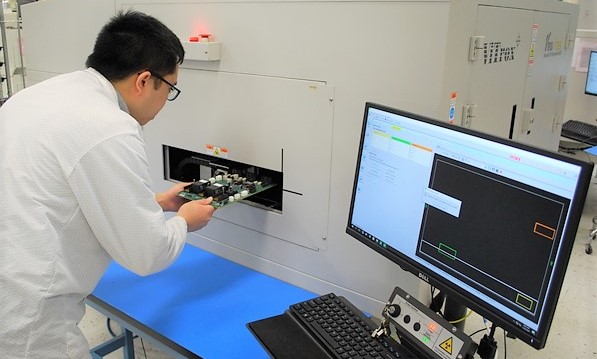
Automatic X-ray (5DX)
Paramit maintains a PCBA process of <10 defects per million opportunities (DPMO). However, a flawed board can pass all tests even when the integrity of the BGA (ball grid array) solder joints is questionable. To address this concern, Paramit performs an automated x-ray (5DX) inspection on all hidden solder joints. This inspection process combined with low levels of rework and a very high process yield ensure that every PCBA will have optimum long term reliability.
In-Circuit Testing (ICT)
ICT verifies electrical continuity, component values and orientation, and the timing of specified circuits. Paramit’s ICT development team has extensive experience developing high-end custom solutions such as in-system programming for EEPROMs (electrically erasable programmable read-only memory) and PLDs (programmable logic devices), functional/cluster testing, boundary scan, BIST (built-in self-test) and data collection/analysis.
PCBA Functional Testing
Functional testing ensures the PCBA performs as designed in a real-world environment. Paramit’s test team focuses on three goals for optimizing this testing process in the production environment:
- Thoroughly exercising the PCBA to verify it will perform flawlessly within its design parameters once installed in a device
- Streamlining the test process by reducing the time and resources required to perform the test while still maintaining the integrity of the test
- Identifying and correcting the root causes of failures in addition to repairing individual failures. Our highly skilled team can reduce your costs and significantly increase throughput during functional testing
We also use PCBA process validation to validate the expected outputs for every piece of equipment.